Hours: Mon & Thu 9:30–7 · Tue & Fri 8:30–6 · Wed/Sat/Sun Closed
(908) 771-0220
Advanced Therapy
Non-surgical, traction-based relief for disc herniation, sciatica, and degenerative disc disease — administered by Union County's most experienced chiropractic team.
When a spinal disc herniates or degenerates, the disc material can press against adjacent nerve roots, producing pain that radiates into the arms or legs. Conventional traction applies steady, uniform tension — spinal decompression therapy applies computer-controlled, variable traction cycles that create a true negative-pressure environment inside the disc.
This negative intradiscal pressure serves two critical functions: it allows herniated or bulging disc material to retract away from the nerve, and it draws oxygen, water, and nutrients back into the disc itself — supporting the body's natural healing mechanism.
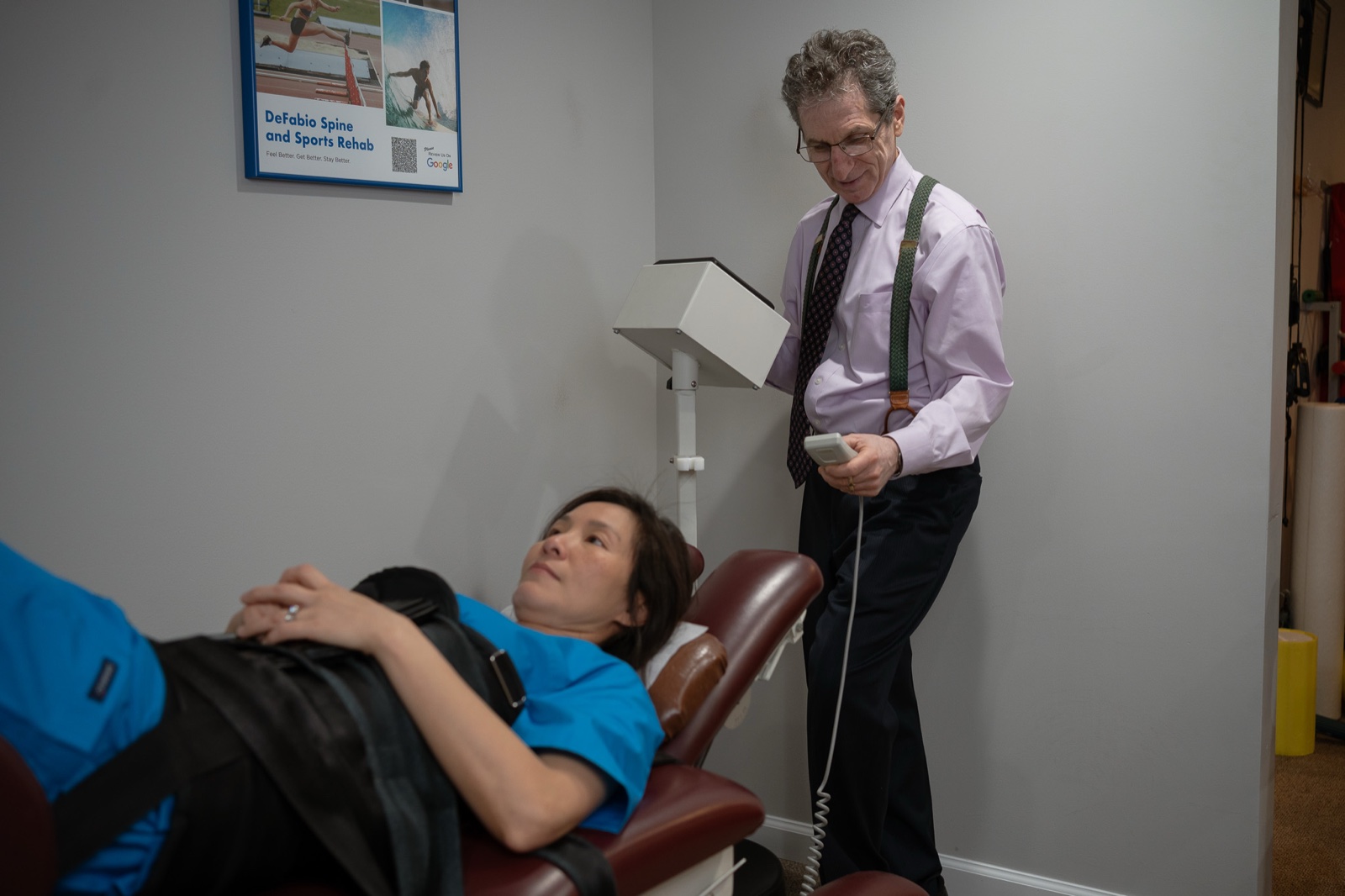

Dr. DeFabio reviews your imaging and performs a detailed clinical examination before scheduling any decompression sessions. Patients with certain fractures, spinal instability, severe osteoporosis, or prior spinal fusion may not be appropriate candidates — these contraindications are screened carefully.
The treatment table is programmed to your specific spinal level, body weight, and tension tolerance. Parameters are adjusted session by session based on your response. No two protocols are identical.
Decompression works best as part of a broader plan that includes spinal adjustments to restore joint mechanics, targeted exercises to stabilize the affected segment, and Winback TECAR therapy to support soft tissue healing around the disc.
You lie comfortably on the motorized decompression table. A harness is fitted around your pelvis or torso depending on the region being treated. The table applies gentle, intermittent traction for approximately 30 minutes. Most patients find sessions relaxing. You are monitored throughout and can stop the session at any time.
Schedule an evaluation with Dr. DeFabio to find out if you are a candidate for non-surgical spinal decompression.
Spinal decompression is a non-surgical traction-based treatment that uses computer-controlled variable tension to reduce intradiscal pressure, encouraging herniated material to retract and allowing nutrients back into the disc.
Good candidates have herniated or bulging discs, degenerative disc disease, sciatica, or facet syndrome. Dr. DeFabio screens for contraindications before any recommendation is made.
Most patients find sessions comfortable. Mild soreness after initial sessions is normal. Significant pain during treatment should be reported immediately.
A typical protocol involves 15–20 sessions over 4–6 weeks, monitored and adjusted based on your response.
Coverage varies. Some plans classify it as experimental. We verify benefits before treatment begins and discuss all financial options.